Graham County has about 8,500 people, two-thirds of its land is national forest, and it has exactly one building that works as its concert hall, gallery, after-school program, and front porch. That building is the Stecoah Valley Cultural Arts Center, a rock schoolhouse in the Stecoah community outside Robbinsville, and on summer concert nights it does something that should not be possible in a county this small: it fills 320 seats for bluegrass.
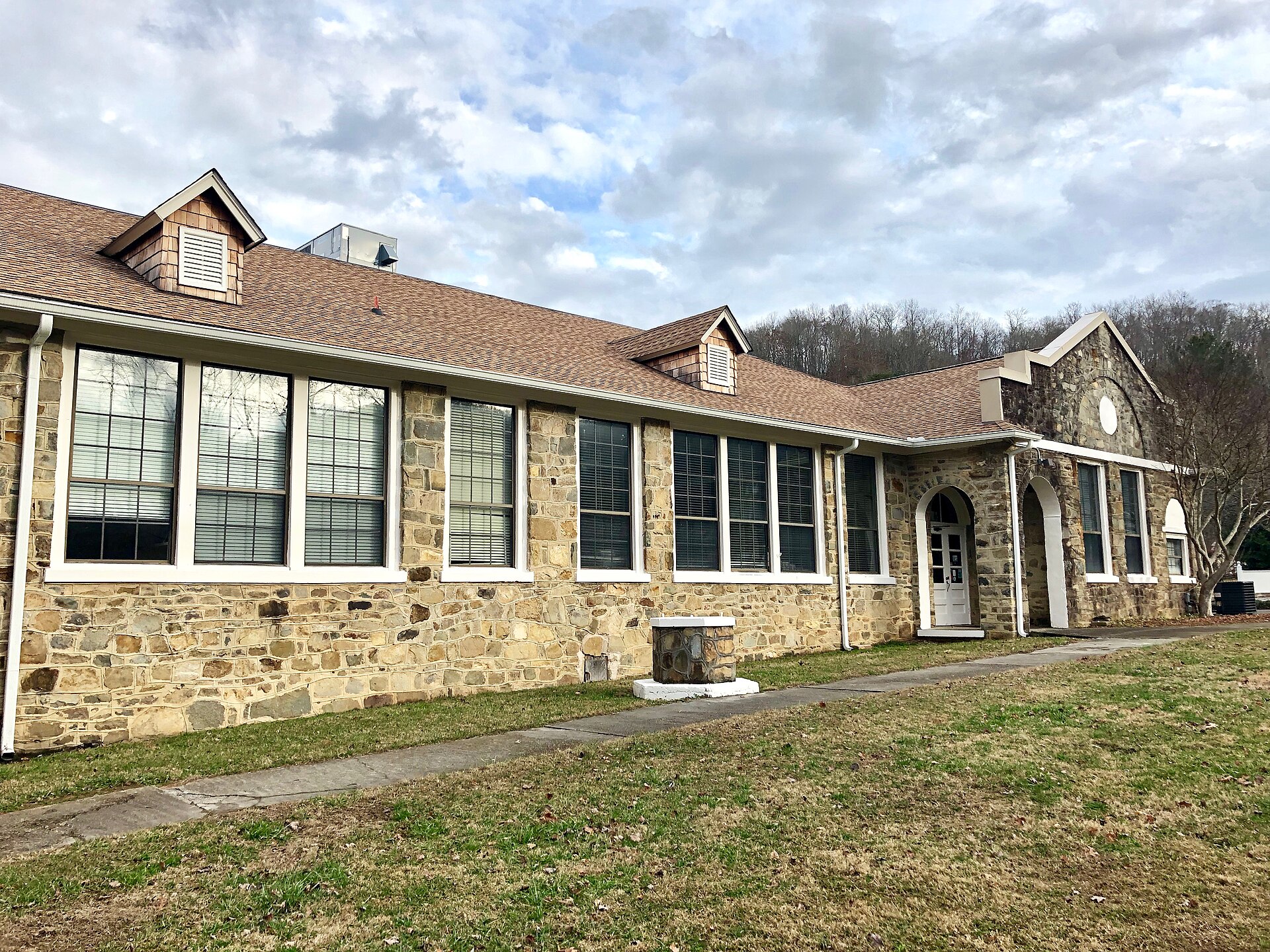
The schoolhouse the valley built
Stecoah Union School was built of native rock by local labor and opened to its first students in the fall of 1926. The main building burned shortly after completion and was rebuilt inside the same stone walls, reopening in 1930. It served as the community's K-12 school for 68 years, until consolidation closed it in 1994.
The building sat empty for two years. Then a group of local citizens formed a nonprofit to put it back to work, and the Stecoah Valley Cultural Arts Center moved in during 1996. The 14,000-square-foot schoolhouse now runs more than 20 programs reaching roughly 15,000 people a year, and in 2011 Western Carolina University gave it the Mountain Heritage Award for keeping southern Appalachian culture alive in practice rather than in a display case. The name itself is older than the building: Stecoah comes from the Cherokee "Usdi Gohi," meaning "little place," and more than a dozen Cherokee families lived in this valley at the time of the Removal.
The stage: Monroe, the Carters, and a summer series
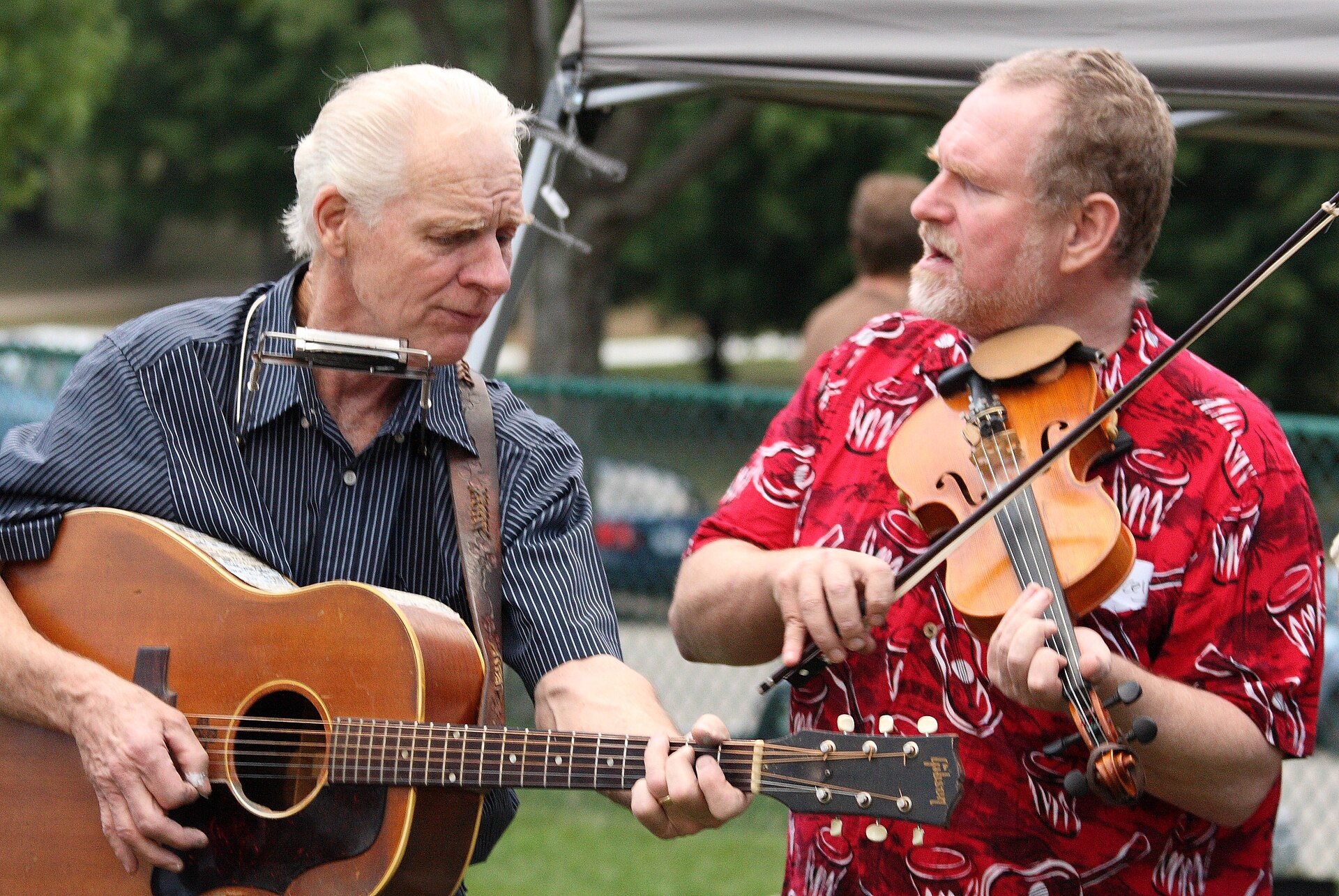
The auditorium stage was a working music venue long before it was a preserved one. In the 1940s and 1950s, Bill Monroe and the Blue Grass Boys, the Carter Family, Flatt and Scruggs, and Chet Atkins all played this room for local audiences, many of them acts that also appeared on Knoxville's WNOX "Mid-Day Merry-Go-Round" radio show. The center's summer concert series, An Appalachian Evening, picked that thread back up and has run for over 25 years. Recent seasons have brought Balsam Range, the Steeldrivers, Doyle Lawson and Quicksilver, and the Kruger Brothers, and Doc Watson played here in the series' earlier years.
The room is the draw as much as the lineup. Three hundred and twenty seats, original vaulted ceilings, restored wood, and acoustics the center describes as a little rock schoolhouse with a great big sound. Concerts run through the summer; check the center's site for the current season before you plan a trip around one, and buy tickets ahead, because 320 seats in a county of 8,500 is not as much slack as it sounds once the word gets out.
More than concerts
- The Artisans Gallery sells work from more than 100 local and regional artists, ceramics, wood, glass, fiber, and metal among them. It is open Monday through Saturday, 10 a.m. to 4 p.m., and it is the most reliable place in the county to buy something made here.
- Junior Appalachian Musicians (JAM) teaches local kids traditional stringed instruments, and the center's after-school program serves more than 50 students a year.
- Stories and Seeds is a free storytelling gathering held twice a month, year-round, with local speakers on the history and traditions of these communities. It is the least advertised and most local thing on the calendar.
- The Courtyard of the Cherokee, outside, centers on an Eternal Flame sculpture honoring the seven clans of the Eastern Band of Cherokee Indians, with interpretive panels translated into the Snowbird dialect spoken by Graham County's own Cherokee community. That community's longer story is in our guide to Junaluska and the Snowbird Cherokee.
Eating local in Graham County
Set expectations by the map: this is a county of 8,500 people, so the restaurant list is short, local, and mostly in Robbinsville. Two standbys cover most visitors well.
Lynn's Place, at 237 East Main Street in Robbinsville, is the family-run diner on the main strip, the stop riders and drivers compare notes about. The dish people name is the baked trout, which makes sense in a county cut through with trout water.
Tapoco Tavern sits on the banks of the Cheoah River at the Historic Tapoco Lodge, north of Robbinsville on US-129, at a lodge built in 1930. It serves lunch and dinner, with a wood-fired pizza oven alongside the trout and burgers, and it welcomes diners who are not lodge guests. Reservations are recommended, and the riverside seating fills first. It pairs naturally with a drive on the Dragon or Moonshiner 28, covered in our Moonshiner 28 guide.
One practical habit: in Graham County, call before you drive. Hours in a small county bend around seasons, concert nights, and family schedules, and the drive to anywhere is long enough that a dark dining room is a real disappointment.
Keep reading
- The Nantahala River: Rafting the Gorge, the NOC, and 50-Degree Water
- The Town of Lake Santeetlah: 38 Residents, 200 Homes, One Long Water Fight
Common questions
When do concerts at Stecoah Valley Center happen?
The An Appalachian Evening series runs through the summer, on concert evenings in the 1926 schoolhouse auditorium. The center posts each season's lineup and ticket dates on its website; the gallery and grounds are open year-round.
What else is at the center besides music?
An artisans gallery with work from more than 100 regional artists, a kids' traditional-music program, an after-school program, storytelling gatherings, classes, and the Courtyard of the Cherokee outdoor exhibit. It also serves as a visitor information stop for Graham County.
Where should we eat before a concert?
In Robbinsville before you drive out: Lynn's Place on East Main Street is the local diner standard. Tapoco Tavern, up US-129 on the Cheoah River, is the pick if you are coming from the lake or the Dragon side. Either way, check hours the same day.